
-
 [交通]
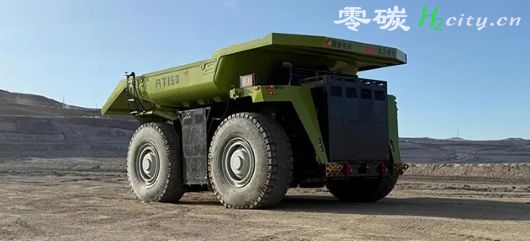
国家发改委:有序开展电动重卡、氢能矿卡规模化替代燃油重卡
[交通]
国家发改委:有序开展电动重卡、氢能矿卡规模化替代燃油重卡
-
[氢能]
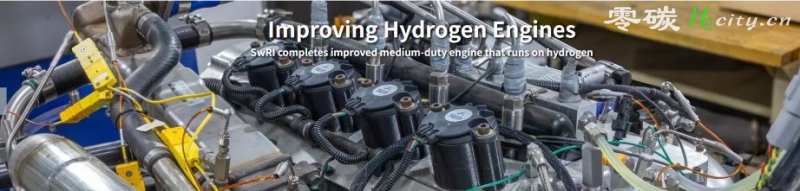
美国西南研究院展示新型氢内燃机,适用于中型卡车并提供类似柴油机性能
-
[储能]
比亚迪申请六项固态电池专利,拟于2027年投产双电解质正极(固态)电池
-
[氢能]
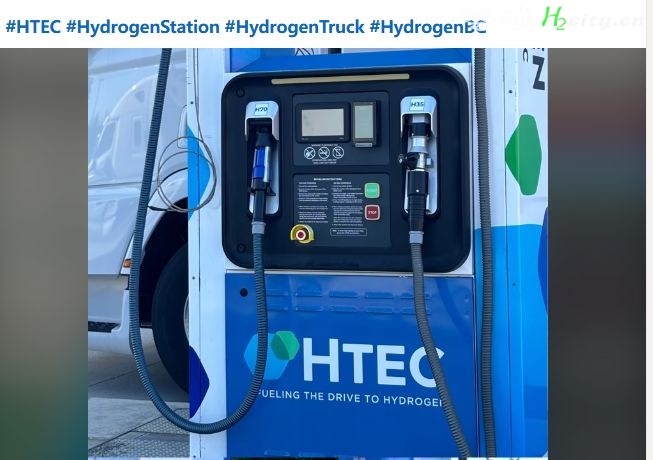
推动重型运输脱碳:加拿大首座700巴商用重型氢气加注站正式投运
-
[储能]
谷歌携手Energy Dome于爱尔兰奥法利郡打造23兆瓦二氧化碳电池储能项目
-
[交通]
中国 首台百吨级纯电双向无人驾驶矿卡在通辽投运
-
[氢能]
美国加州:蒙特贝洛公交公司 (MBL) 推出首批氢燃料电池电动公交车 (FCEB)
-
[光伏]
光伏板挡住了阳光,下面的草为啥长得更茂盛了?
-
[技术]
海水制氢提镁:能把水变燃料? 中国海水炼金术,把海水变成免费的能源宝库
-
[交通]
茂名港完成绿色甲醇首船作业,贯彻双碳战略取得标志性成果




Michael Sura:
I published a post comparing the energy consumption of a Tesla Semi and an average diesel truck. Many of you have asked if the Tesla Semi defies the laws of physics by achieving such low power consumption figures even at full load. So I decided to play with numbers a bit and especially with physics.
Ftract = Frr + Fair
The rolling resistance
Frr = m * g * Crr
Where m is the vehicle mass of Tesla Semi (40000 kg), g is acceleration constant (9.81), and Crr is the rolling resistance coefficient, which would achieve a value 0.0044 (see here https://lnkd.in/eDjyW6HF) when it is supposed that the best-in-class pneu are used by Tesla.
Frr = m * g * Crr = 40000*9.81*0.0044=1727 N
The aerodynamic resistance Fair can be expressed by a formula
Fair = 0.5 * ρair * v^2 * Af * Cd
Where ρair is the density of air, v is the Tesla Semi’s speed, Af is its projected frontal area of Tesla Semi, and Cd is the coefficient of drag of Tesla Semi.
Ρair is 1.204 kg/m3 , v = 27.78 m/s (100 km/h), Af was estimated to be 9 m2 according to https://lnkd.in/eTYNaU5A, Cd - Tesla claims that the drag coefficient of Tesla Semi is 0.36 https://lnkd.in/eJ2NASZX
Fair = 0.5 * ρair * v^2 * Af * Cd = 0.5*1.204*(27.78)^2*9*0.36=1505 N
Ftract = Frr + Fair = 1727 + 1505 = 3323 N
The amount of force Ptract required to move the wheels Tesla Semi would be:
Ptract = Ftract * v = 3232 N * 27.78m/s = 89.785 kWh
We assume that Tesla Semi’s pack-to-wheel efficiency is 95% because there are used superefficient IPM-SynRMs (electric motors), SiC inverters, etc.
The resulting energy consumption Ekm per km would be
Ekm = (Ptract /0.95)/100=0.945 kWh/km
As I mentioned above, this is the simplified calculation of energy consumption, for example, acceleration resistances, which depend on driving style, were not taken into account. Consumption is also affected by the force of the wind, rain, road conditions, etc.
My calculation showed that the 1.06 kWh/km consumption achieved by a fully loaded Tesla Semi is achievable.、
 Semi's efficiency is 1.1 kWh/km or 1.7 kWh /mile according to the people at Pepsi.
平台声明:该文观点仅代表作者本人,零碳未来网 系信息发布平台,我们仅提供信息存储空间服务。




发表评论 取消回复