
-
 [交通]
国家发改委:有序开展电动重卡、氢能矿卡规模化替代燃油重卡
[交通]
国家发改委:有序开展电动重卡、氢能矿卡规模化替代燃油重卡
-
[氢能]
美国西南研究院展示新型氢内燃机,适用于中型卡车并提供类似柴油机性能
-
[储能]
比亚迪申请六项固态电池专利,拟于2027年投产双电解质正极(固态)电池
-
[氢能]
推动重型运输脱碳:加拿大首座700巴商用重型氢气加注站正式投运
-
[储能]
谷歌携手Energy Dome于爱尔兰奥法利郡打造23兆瓦二氧化碳电池储能项目
-
[交通]
中国 首台百吨级纯电双向无人驾驶矿卡在通辽投运
-
[氢能]
美国加州:蒙特贝洛公交公司 (MBL) 推出首批氢燃料电池电动公交车 (FCEB)
-
[光伏]
光伏板挡住了阳光,下面的草为啥长得更茂盛了?
-
[技术]
海水制氢提镁:能把水变燃料? 中国海水炼金术,把海水变成免费的能源宝库
-
[交通]
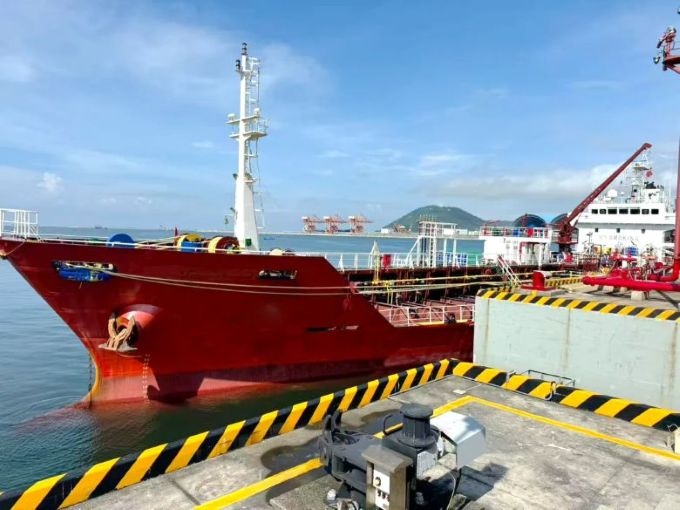
茂名港完成绿色甲醇首船作业,贯彻双碳战略取得标志性成果



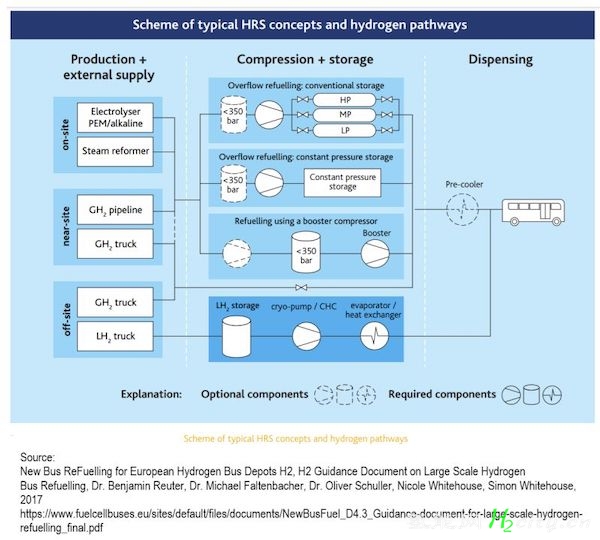
Fueling the Future: Inside the Brains of a Hydrogen Refuelling Station
? 1) Hydrogen Refuelling Station (HRS) for buses components:
1.1 Hydrogen supply: on-site hydrogen generation or off-site production, with H2 delivery to the station;
1.2 Hydrogen Compression: to get pressure required for the vehicles;
1.3 Hydrogen Storage: hydrogen stored at the refuelling station;
1.4 Hydrogen Dispensing: transferring hydrogen to the vehicles.
? 2) On-site hydrogen production:
2.1 Water electrolysis:
An electrolyzer is a device that uses electricity to split water into hydrogen and oxygen.
- Proton Exchange Membrane (PEM) electrolyzer
- AEL (alkaline electrolysis) electrolyzers:
- Anion Exchange membrane (AEM) Electrolyzer
- Solid Oxide Electrolyzers Cell (SOEC)
2.2 Steam reforming:
- A steam reformer uses methane and water vapor to produce hydrogen through a catalytic reaction known as steam methane reformer (SMR).
- For carbon-neutral hydrogen production, renewable electricity is required for electrolysis, or biogas methane for steam reforming.
? 3) Hydrogen delivery for off-site production:
3.1 A hydrogen pipeline can transfer high volumes of hydrogen.
3.2 Gaseous hydrogen (GH2 ) is transported in tube trailers at different pressures.
3.3 Highly insulated trailer tanks deliver the Liquid Hydrogen (LH2, -253°C at ambient pressure) from a hydrogen liquefaction plant to the HRS.
3.4. Mass of hydrogen in 1m3:
1 bar (0.1 MPa), 25°C → 0.081 kg H2
100 bar, 25°C → 7.67 kg H2
300 bar, 25°C → 20.54 kg H2
500 bar, 25°C → 30.81 kg H2
Liquid hydrogen → 70.8 kg H2
? 4) Hydrogen Compression:
4.1. Reciprocating Hydrogen Compressors [API 618 and API 11P] are used in low hydrogen volumes, and high hydrogen pressures.
4.2. Centrifugal hydrogen compressors are used for high volume flow and low pressure ratios.
4.3. Diaphragm hydrogen compressors use a membrane to separate the hydrogen from mechanical parts to avoid issues with sealing wear.
4.4. Ionic liquid piston hydrogen compressors use an insoluble ionic liquid to minimise the risk of hydrogen contamination and energy costs by removing seals, bearings, and other moving parts.
4.5. Cryo-pumps or cryogenic hydrogen compressors (CHC) increase hydrogen pressure efficiently and without hydrogen storage. They are more compact and work better than compressors for gaseous hydrogen.
? 5) Hydrogen storage:
5.1. Type I Hydrogen steel tank (300 bar);
5.2. Type II Hydrogen Tank has fibreglass hoop wrap outside and an inner liner of aluminium (300 bar);
5.3. Type III has fibreglass full wrap outside and an inner aluminium liner (700 bar);
5.4. Type IV has an additional plastic wrap inside to seal off the hydrogen (700 bar).
? 6) Hydrogen Dispenser:
- ISO 19880 Series
- ISO 17268
- SAE J2600-3
For reference, see the attached image.
平台声明:该文观点仅代表作者本人,零碳未来网 系信息发布平台,我们仅提供信息存储空间服务。
发表评论 取消回复